• BMW i9 Review

    Many suggestions from observers BMW abroad, wants the German car manufacturer's latest supercar create products that are able to break the world market.

  • Range Rover Velar vs Porsche Cayenne vs Audi Q7: Luxury SUV Mega Test

    The defining sound
 of this year’s most-wanted luxury car, the new Range Rover Velar, isn’t generated by its multi-cylinder diesel engine, some clever active exhaust or even 
its 17-speaker audio system.

  • TLamborghini Aventador In Gold Wrap

    Lamborghini Aventador In Gold Wrap. Exotica an iron bull Lamborghini Aventador increasingly dazzling with gold bandage on her sensitive spots. Not many people around the world who could have it. Only this, the bourgeoisie will be able to ride the legendary car.

  • Dodge Ram 2500 Laramie Blackout Edition

    Dodge Ram 2500 Laramie Blackout Edition. Dodge Ram 2500 looks outside looks so dark. No one did, because the car we tried a special edition Dodge Ram 2500 Laramie.

  • Mercy 300SL Alloy Gullwing

    Mercy 300SL Alloy Gullwing. Mercedes is also no less-less in making luxury cars in the post second world war era. One is the Mercedes 300SL Alloy Gullwing circulating 1955. Moreover, the car is only produced 29 units in the world.

Showing posts with label BMW. Show all posts
...

BMW i3 Review

BMW i3 Review
From £30,250

There may be disquiet about its gentle rate of climb, but the electric car has – at last, once and for always – taken off.

Its presence can no longer be ignored. Experts are already predicting the year when EVs will account for a million registrations around the world. While every motorshow suggests that the pace at which EV technology is progressing is off the charts, with the 2017 Frankfurt show already predicting battery ranges in excess of 600 miles and charging times that will rival the amount of time it takes to refill a conventional combustion engine, by the end of this decade.

A roll call of a few of the big introductions of 2013 shows seemed to be behind the big breakthrough, with the Renault Zoe proving that EVs can be cheap, the Tesla Model S that they can be grand and the Porsche 918 Spyder that they can be supercars. It’s as if every new example represents a significant step forward for the breed.
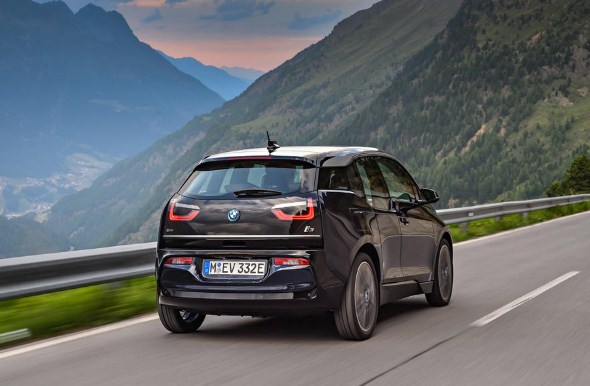
Fast forward four years and the market is awash with options from hybrid vehicles such as the Toyota Prius and Hyundai Ioniq, through to the Volkswagen Golf and Passat GTEs, Volvo's T8s and the Honda NSX. While the electric market has seen Tesla stretching its capability with the Model S and Model X, alongside the continuing development of the Volkswagen e-Golf, Nissan Leaf and Renault Zoe, while others are considering entering the market for the first time - as Jaguar are with the i-Pace.

But one of the first to the party, particularly from the premium segment's point of view was the i3, the first battery-powered series production BMW. It is the battery car done with evident freedom, imagination and commitment and then draped in European premium-brand allure.

BMW has not dabbled in mass-production electric cars before the i3 (and its sister car, the hybrid i8), but its success has seen the idea spawn for the i5 - which was first seen in BMW i Vision Dynamics at Frankfurt. However, the programme that spawned these models – Project i – does provide direct antecedents.

The first phase included the Mini E, which offered a remarkably similar range and performance the i3 and began field testing in 2009 - with Mini's first fully-electric production model announced to be built in Oxford in 2019. This was succeeded in the second phase by the ActiveE, a 1 Series that previewed the i3's electric motor and entered two years of global testing in 2012 with a fleet of 1100 cars.

BMW's i3, then, represents the sum total of all that was learned in that lengthy and studious process. Two versions are offered. The first version a 168bhp pure electric version with a range of up to 186 miles, although in real-world driving expect that to be more around the 125 mile mark. The second is new to the i3 family, and is the sportier 'S' model which has a punchier 181bhp motor which can pass 62mph in 6.9sec before reaching its top speed of 99mph, all while maintaining a real-world range of 125 miles. To put that in perspect, the range is no match for the Teslas of the world or even the updated Zoe, but it betters the bigger capacity Leaf.

Both variants can be teamed with a two-cylinder petrol engine to help eradicate some of that range anxiety most feel behind the wheel of an EV.  So, when the battery becomes depleted, the generator fires up to ensure that you can continue your journey.

Could there be a better invitation than the BMW i3 to take the plunge on zero-emissions motoring? You’re about to find out. Source by autocar.co.uk

Continue to Design & Styling
Share:
...

BMW i3 Design & Styling

BMW i3 Design & Styling

It took a lengthy research effort – featuring prototypes such as the Mini E and BMW 1 Series Active E, and developing carbonfibre composites to new heights on strength, longevity and cost-effectiveness – to bring BMW to the point where it was ready to introduce this car. In the meantime it has watched rivals come to market with quicker-fix battery cars, but now comes the pay-off.

The i3 is more innovative than anything that the early adopters of EVs have been offered so far. Like the Tesla Model S, it is a ground-up electric car, not a platform-engineered adaptation. Something others have followed - just look at the Hyundai Ioniq and Jaguar i-Pace.

But unlike even the Tesla, it is constructed predominantly from carbonfibre-reinforced plastic (CFRP). That CFRP has been micro-engineered to balance weight and strength against cost in pioneering proportions. It undoubtedly adds to the purchase price of the car, but CFRP also allows BMW to offset the 230kg of the lithium ion battery pack from which the i3 draws its power almost entirely.

BMW initially installed 60kWh battery packs at the i3's launch, but 30 months on it has been replaced with a more powerful Samsung-developed battery pack, which remains the same size but is more dense that its predecessor – meaning it can hold 50 percent more charge. The 94kWh i3 is also fitted with a new, improved charging system, including a DC charger designed to charge the i3 up to 80 percent in 40 minutes, which translates to a range of 100miles.

BMW also off a home charging unit called the i Wallbox Connect, which will provide 11kW of power to charge the battery, meaning it can provide the i3 with a range of 112 miles in under three hours, which is supposedly five times quicker than doing the same process through a three pin plug. This teamed with BMW's Digital Charging Service aims to provide users with 'a smart ecosystem' where charging costs are optimised and those with solar panels can make the most of the electricity they have gathered.

As part of the weight-saving mission, this car also has hollow driveshafts, lightweight cabin fittings – a honeycomb windscreen wiper, even – and forged aluminium suspension and wheels.

And what wheels: five inches wide but 19 inches in diameter, for excellent aerodynamics and low rolling resistance. Will we see a consequent shortage of mechanical grip? Possibly. But there’s no problem with its turning circle; it’s a decidedly wieldy 9.86m.

The extended range version – fitted with a two-cylinder engine/generator to quell any range concerns and therefore the heaviest that any i3 is likely to get – weighed 1315kg. That’s 150kg lighter than the Renault Zoe Dynamique Intens we tested. Source by autocar.co.uk

Continue to Interior
Share:
...

BMW i3 Interior

BMW i3 Interior

For anyone accustomed to BMW’s established cabin architecture, this interior’s appearance is quite a step change. You perch elevated and upright on firm, flat seats, confronted not by a darkly imposing dashboard but by a stripped-back, light-toned design flooded with natural light from the enlarged windscreen. There’s airiness, space and, yes, a definite cheeriness to rival any high-sided B-segment model.

What separates the i3 from them (aside from its complete lack of a foot-hindering transmission tunnel) is the cherry-picked locations where either its price point or eco credentials poke through. BMW has done away with the instrument cluster completely, opting instead for a pin-sharp screen ahead of the driver. Most other functions are corralled on to an even larger 10.25-inch widescreen display controlled by the familiar, thigh-high iDrive.

The backdrop for these handsome slabs of LCD is a swathe of PUR-Sensatec, the entirely recycled trim material that closely resembles moulded packaging. For an early adopter, one imagines the juxtaposition would be as covetable as milled aluminium on house brick. The layout of what switchgear is left is impeccable, and the single steering column stalk – including drive select – is the icing on the modernity cake.

Aft of the slim backrests is arguably less successful. The i3’s structural integrity may have permitted the elimination of B-pillars and fitment of coach doors, but the opening remains slender and too distant from the floor to be labelled especially convenient. Nor is the space they access particularly roomy. Even worse, because they interlock, the back cannot be accessed without first opening a front door.

Nevertheless, the i3 provides one of the most appealing environments available for under £35k.

The i3 on the whole is certainly very well equipped with an iDrive system chocked full of BMW ConnectedDrive Services, sat nav, DAB radio, Bluetooth and a USB port. There are also heated front seats, rear parking sensors, and auto lights and wipers thrown into the package.

However, BMW want the i3 to be more than a mere driving machine but a personal statement, and have created four ‘interior worlds’ each with their own design style.

There is the standard fit Atelier trim, Loft, Lodge and Suite options, which upgrades the seats from cloth to premium leather and the dashboard from recycled material through to Eucalyptus wood

The 2017 facelift has seen the i3 given a moderate refresh with a new front bumper and rear apron, while LED headlights and a new generation of iDrive help give the small EV added sparkle. Now the i3 is smarter than before with the options to parking assistant, a rear-view camera, collision and pedestrian warning, city braking, active cruise control and traffic jam assistant - which helps maintains a safe gap to the car in front in traffic up to speeds of 37mph.

As per other BMW models, the iDrive system in the i3 has been updated, so the latest generation of the infotainment's software is used, and all i3s now come with a 10.25 in screen as standard, as is an improved version of BMW's iConnectedDrive and improved voice recognition, while Apple CarPlay is an optional extra.

The i3S doesn't look all that different from the standard i3, except for the creative use of gloss black exterior trim to give the car a sporty profile and the standrad fit 20in alloy wheels. Source by autocar.co.uk

Continue to Performance
Share:
...

BMW i3 Performance

BMW i3 Performance

Because only the BMW i3’s electric motor is connected to its (rear) driven wheels, this city car has the kind of power delivery that we’ve come to know and love from a pure EV. With peak torque from zero revs and no discernible lag at any speed, you put your foot down and the i3 responds immediately. It responds strongly, too.

The 0-62mph sprint is claimed to take 7.3sec in the all-electric model, and is accompanied by a seamless, prolonged shove in the back. The top speed may be only 99mph, but the performance on the way to it wouldn’t shame a warm hatchback. The range extender, which weighs 120kg more, takes a slower 8.1sec and has the same top speed. The i3S with its more powerful motor can do the same sprint in 6.9sec (or 7.7sec in Range Extender form), before topping out at the same top speed of 99mph.

Normally, you’d be frightened to use all of that poke in an EV because of the rapidly reduced range that a heavy right foot brings. And on battery power alone, the i3, in our hands, returned a typical range of about 75 miles.

But, in range-extender versions of the i3, the fact that there’s that twin-cylinder bike engine secreted beneath the boot floor gives you a certain confidence, even if the fuel tank is only bike-sized, too.

It’s possible to ask the i3 to hold its battery charge once it has fallen below 75 percent full, from which point the car will run with electrical power provided by the petrol generator.

In doing so, we found that the battery depletes a little between switch-offs, but we still rate the range extender as an extremely worthy feature, turning the i3 from short-hop urbanite into something acceptable as an only car.

Find yourself without electrical back-up for a few days and the i3 will give you about 40mpg on generator, accompanied by a muted, quite endearing twin-cylinder thrum.

On battery power, we saw as much as a 94-mile range and as little as 68 miles. With a fresh charge and a fresh tank, then, you could expect comfortably over 150 miles before having to find a power source of one kind or another. Source by autocar.co.uk

Continue to Review
Share:
...

BMW X7 concept leaks ahead of Frankfurt motor show debut

BMW X7 concept leaks ahead of Frankfurt motor show debut

Huge range-topping SUV concept’s full styling shown; kidney grilles dominate the front end while a rear light bar follows the Porsche Cayenne’s lead

Images of the BMW X7 concept have been leaked ahead of the car’s official debut at the Frankfurt motor show next week.

The images, which surfaced on Bimmerpost, show the car’s front end, which is dominated by huge kidney grilles with slim lights and deep air intakes.

The grilles, as has been suggested on the production version of the 8 Series, will be toned down from the larger units on the concept.

A charge point on the front passenger side wing with 'i' badging and the 'eDrive' badging on the D-pillar reveal the concept will be a plug-in hybrid. In one picture, 'Hybrid’ mode can be seen, as well as a petrol gauge on the left.

At the rear, the car adopts similar styling to the Z4 Concept, which was also recently revealed, with slimline lights replacing the chunkier lights of current-generation BMWs.

The car’s six-seater layout will be turned into seven seats for production to rival the Mercedes-Benz GLS, Range Rover and Audi Q7.

Engines will likely be shared with the 7 Series, including a 3.0-litre spawning 30d, 40d and 50d variants, as well as a 4.4-litre petrol V8. A performance variant could get the same four-wheel drive and 6.6-litre V12 from the M760Li xDrive - the fastest-accelerating car the brand has made, with a 0-62mph time of 3.7sec.

A hybrid version is a dead cert; the concept’s hybrid powertrain signals that the production model will get an iPerformance version akin to the 740e iPerformance. Source by autocar.co.uk
Share:
...

BMW M240i Review

BMW M240i Review
Price From £33,955

Having passed every test we’ve laid in its path - even against the 5.0 V8 Mustang, BMW’s M240i coupé – has one more hurdle to jump, one more opportunity to show if – and if so, why – it’s one of the most exciting sports coupé on the block, even though its had its crown snatched by the arrival of its bigger brother - the M2.

Rebranding the 1 Series coupés and convertibles as 2 Series is part of BMW’s new naming strategy, but it also gives a nod to Munich’s original compact coupé: the 02 coupé series.

The two-door BMW 1600-2 arrived in 1966, with the 2002 following in 1968. Then in 1973 BMW launched the car most would consider to be the closest spiritual antecedent of the M240i: the 170bhp 2002 Turbo, Europe’s first turbocharged mainstream passenger car.

On first inspection in the US, when BMW labelled it the M235i, Richard Bremner described it as “the most enjoyable, well balanced model in BMW’s range”. After a subsequent European drive, road tester Nic Cackett labelled it “a sports car of the highest order”. However, since then this order has been adjusted by the arrival of the 365bhp M2, and in 2016 BMW rebadged the M235i as the M240i as it has done with every other car in its range holding the 35i moniker. While the hardware under the bonnet has barely changed, the M240i gets its power output boosted to 335bhp, giving it an 13bhp increase. July 2017 also saw BMW give the M240i a much needed facelift, while everything under the bonnet was left untouched the exterior and interior were given a revitalisation.

The original M235i also bettered its competition from Mercedes-AMG and Audi in a UK group test, shaded only by the significantly more expensive but less practical Porsche Cayman. Could we be on for a perfect five-star score? The omens are promising, even if its ballastic brother misses out by half a star.

Moreover, are we looking at a new performance legend? Having turned the last M3 coupé into a £60,000 buy and placed the M4 and the M2 equally out of reach for a great many of us, has BMW invented a new affordable sporting hero in the M240i? Source by autocar.co.uk

Time to see if a legend has been born.

Continue to Design & Styling
Share:
...

BMW M240i Design & Styling

BMW M240i Design & Styling

There is something undoubtedly alluring about a powerful rear-drive coupé such as the M240i. This is a part of the market where affordability makes compromise common – where hatchback-based front-drive pseudo-coupés jostle with true three-box designs.

With the 2 Series, however, BMW has seized the opportunity to offer both a purer vision of a downsized two-door and a proper BMW to boot, with a longways engine, driven rear wheels and the unmistakable separation of roof and bootline that makes a coupé a coupé. It’s a commitment that has produced a distinctive, desirable car. Using this fine blueprint BMW also whipped the roof off and replaced it with fabric in the shape of the convertible - and to their credit have also included the M240i into that range too.

Because it’s a 2 Series, of course, a bit of growth relative to the 1 Series coupé was inevitable. So the M240i is 110mm longer than an M140i three-door, as well as 72mm longer than the old 135i coupé.

The car’s styling is distinguished from that of the 1 Series hatchback, with which it shares some panels, by different headlights and bumpers. You can spot an M240i over a lesser 2 Series, meanwhile, by its large front air dams, the absence of front foglights, the grey door mirrors and the smoked exhaust pipes. For the 2017 facelift, BMW gave the M240i a new set of LED lights at the front and rear as standard, alongside tweaks to the air intake and famous BMW kidney grille. Inside the ergonomics have been altered to be more driver-focused, plus touches of chrome, new air vents and the latest iteration of BMW's iDrive infotainment system - including a touchscreen display.

The M240i rides 10mm lower than a standard 2 Series and gets passive M Sport suspension, enlarged M Sport brakes and special Michelin tyres. Adaptive M Sport suspension, with variable dampers, is optional, and came fitted to our test car.

Delve into BMW’s M Performance dealer-fit accessories catalogue and you’ll find that an even more purposeful passively damped set-up is offered, as well as even more powerful brakes, lightweight forged 19-inch alloys and an M Performance mechanical limited-slip differential. Our test car had none of the above.

Power comes from BMW's twin-scroll turbocharged 3.0-litre straight six, in a more developed state of tune than we found it in the M135i, but when BMW renamed the range, they also turned up the wick, so the M240i now produces 335bhp and 369lb ft - with the peak twist figure intriguingly matching that produced by the M2.

BMW’s N55 3.0-litre turbocharged straight six has been through enough updates and revisions to cause a codename-related headache. In many lesser applications the engine is simply dubbed the N55 (to distinguish it from the earlier twin-turbocharged N54), and develops 302bhp and 295lb ft of torque.

In 2012 it found its way into the M135i with an improved 316bhp and 332lb ft and was rechristened the N55HP. The original M235i received a new ECU and cooling system, the unit produced 322bhp in the M235i. By 2016, BMW wanted to up the ante, the arrival of the M2 was heralded and the tweaks to the M240i went rather unnoticed, with the headline figures left to make a statement on their own.

On top of all that, the 3.0-litre straight six used in the new M3 and M4 is an even more substantially respecified N55. Codenamed S55, it has power and torque outputs that are both well into the 400s.

In all cases, the N55 uses one twin-scroll turbocharger, whereas the old N54 had two. Equally confusingly, Alpina’s current B3 saloon uses the N55 block, but the firm junks BMW’s single twin-scroll turbocharger and fits two separate blowers of its own design. Source by autocar.co.uk

Continue to Interior
Share:
...

BMW M240i Interior

BMW M240i Interior

Some fairly sizeable gains are claimed for the 2 Series on occupant space: an extra 6mm of front-row headroom and 21mm on second-row legroom. Our tape measure confirmed the former – along with an additional 30mm of second-row headroom – but we only measured a 10mm gain on back-row legroom.

Still, the tape measure at least confirmed that the 2 Series is a slightly more practical car than the old three-box 1 Series. Up front, the M240i feels spacious enough even for larger drivers – our only criticisms being slightly offset pedals and a driver’s seat that makes you sit a little higher than we’d ideally like.

Access to the back is restricted, but there’s an acceptable amount of space once you’re in – enough for medium-sized adults, albeit only two of them.

BMW’s understated performance makeover is big on material plushness but relatively small on sense of occasion. Black leather sports seats are standard and very comfortable and supportive, while the handsome three-spoke M Sport steering wheel is thinner than M Sport rims have been of late and none the worse for it.

Red instrument graphics and an ‘M240i’ logo in the binnacle, meanwhile, are the most exciting visual elements on show.

As standard, the M240i comes with BMW's iDrive infotainment system, including a 6.5in screen, BMW's ConnectedDrive apps, sat nav, USB and Bluetooth connectivity and DAB radio. There is a host of other convenience items such as automatic wipers and lights, rear parking sensors, sports seats, dual-zone climate control and a Dakota leather upholstery.

Outside, the M240i gets 18in alloy wheels and numerous M Performance developed features including an aerodynamic bodykit, braking system, sports steering rack and suspension set-up, which features on both the convertible and the coupé, while the latter also gets a rear spoiler too. Source by autocar.co.uk

Continue to Performance
Share:
...

BMW M240i Performance

BMW M240i Performance

Fate had it in for the M240i on the day we figured it. The MIRA proving ground was saturated with rain and BMW sent us a test car with a manual gearbox (so no launch control), no limited-slip diff and a worn set of tyres.

In light of those things, cracking 60mph in 6.3sec and 100mph in 14.7sec was no mean feat. A Vauxhall Astra VXR takes longer on both counts – in the dry.

We can well believe the car would probably be quicker than BMW’s 4.8sec 0-62mph claim in perfect circumstances, because once our test car found traction, it took off at genuine sports car pace.

From 80-130mph it matched the figures set by a Porsche Cayman 2.7 to the tenth, despite stronger wind and a near 200kg weight penalty. And on in-gear flexibility – pulling from 30-70mph in fourth – the BMW obliterated the Porsche’s time by almost 4.0sec. In the real world, in other words, on anything other than the toughest mountain road, a Cayman would be fairly easy meat.

The fact that BMW's turbo six is capable of such smooth tractability without ever feeling inhibited by its forced induction is key to the engine’s appeal. This remarkable powerplant gives the M240i a feeling of unburstable, ever-ready performance. It feels mechanically rich and expensive, too, in a class where anything other than four-pot engines are thin on the ground.

Truth be told, the engine – broad-shouldered, sweet-sounding and yet willing to rev – is probably the best advert for this car. Its manual gearbox has a typically springy, mechanical action. It isn’t the slickest of instruments, but it is pleasing to use.

Not pleasing enough, though, that we’d be inclined to choose it over BMW’s eight-speed automatic, which makes the car faster, more fuel efficient, cheaper to tax and more likely to retain its value better. Source by autocar.co.uk

Continue to Review
Share:
...

BMW X1 Performance

BMW X1 Performance

As juvenile as this may seem, job one for any new BMW worth its salt – even a diesel crossover – is to outstrip its competition on outright accelerative pace. Buyers expect nothing less.

But while the X1 performs well, it falls marginally short of that mark.

Our performance data archive has a like-for-like Audi Q3 at a narrow, solitary 0.1sec disadvantage to the X1 from standstill to 60mph, and a similar one both through the gears and locked in fourth gear from 30mph to 70mph.

But the GLA220 CDI 4Matic that we performance tested last year matched the X1’s 0-60mph sprint of 8.2sec and was slightly faster than the BMW to 100mph and in other respects.

If the X1 had gone as fast as BMW claims (7.6sec to 62mph), the familiar selling point would be beyond doubt, but it couldn’t be made to do so. Missing that mark by more than half a second, in a run-in car and in dry conditions, merits a black mark.

However, the X1 certainly feels swift, muscular and relatively free-revving from the driver’s seat. The eight-speed gearbox chooses its ratios well, shifts smartly and locks up without slipping at low revs, allowing the engine’s low-end torque to shrug off the car’s mass when climbing gradients, even in higher gears.

At the other end of the rev range, the 2.0-litre diesel keeps spinning long after rivals have thrown in the towel, revving to well beyond 5000rpm without undue complaint. Given that most similarly sized crossovers take a couple of seconds longer to hit 60mph from rest and aren’t nearly as flexible or free-revving, driving performance could probably still be a selling point for the X1.

It’s a pity that refinement doesn’t do more for the car. A mix of road roar and the usual undertone of coarseness that you tend to get from BMW four-cylinder diesels sent our decibel meter soaring to relatively high levels. The X1 was four decibels louder at a 70mph cruise than the Qashqai we tested last year. That kind of difference is more than big enough to be noticed.

Braking performance for the car is competitive but not outstanding, although the pedal feels carefully tuned and is easy to modulate accurately. Source by autocar.co.uk

Continue to BMW X1 Review
Share:
...

BMW X1 Review

BMW X1 Review
From £27,070

As outstanding as some of its saloons, estates and SUVs have been over the decades, there’s no greater proof of the enduring power of the BMW brand than the success of the previous X1 crossover hatchback.

Over a lifecycle of almost exactly six years, built in factories in India, China and Russia as well as in Germany, the X1 clocked up 730,000 worldwide sales. And yet the X1 was awkward-looking, cumbersome-handling, badly packaged, plainly finished and equally plainly rough and unrefined. Munich’s blue-and-white propeller may never have been risked on such a poor car.

What, you can’t help but wonder, would happen if BMW made a good one? It certainly needs to. In the six years since the launch of the original X1, the crossover market has mushroomed to the point where it has become more important than most of the more traditional segments in which BMW can draw on established experience and strength. Building a good X1, in 2015, is probably more vital than leading the market with any of the firm’s luxury or sporting models.

To achieve that aim, there’s a new platform, new engines and all kinds of new on-board and all-round systems technology at play here – all going towards repeating the sort of European sales domination that BMW has produced with some of its executive saloons.

The transversely engined, predominantly front-drive UKL platform underpins its third series-production model for the BMW Group after the Mini hatchback and 2 Series MPV, and atop sits a body widely rethought for more recognisable SUV looks and significantly better practicality. The Chinese market will become the first to benefit from a long-wheelbase version of the X1, although there is no clear indication over whether the UK may ever see an X1 L.

Among those new engines are the latest three and four-cylinder turbocharged petrols and diesels, many of them providing the obvious performance superiority we’ve come to expect from BMW. But will BMW’s other motive trademark be in evidence here, in the shape of truly distinguishing handling appeal to go with that obvious get-up-and-go? Source by autocar.co.uk

Continue to Design & Styling
Share:
...

BMW X1 Design & Styling

BMW X1 Design & Styling

The most apparent change with this new X1 is a proportional one. The jacked-up estate car looks of the original car have been replaced by a much more conventional crossover bodystyle, with a higher roofline, beltline and seating position.

The visual awkwardness has gone, too, and the X1 now looks more like a downsized X3 or X5 and, perhaps even more important, much more like a premium-brand alternative to a Nissan Qashqai, rather than a curious sort of 1 Series ‘allroad’.

That the car looks slightly shorter of snout is down to the fundamental shift through which all compact BMWs will go over the next couple of years: from a longways engine and rear-wheel drive to a transverse engine and, for the most part, front-wheel drive. You wouldn’t say that the X1 looks any less like a true BMW as a result of the shorter bonnet, although it remains to be seen if we’ll be able to say the same of the next 1 Series.

The X1’s UKL platform brings with it a steel monocoque underbody that, BMW claims, is significantly stiffer than that of the previous car and also allows for a near-perfect 50/50 front/rear weight distribution. If true, such a weight balance would be unusual for a transversely engined car.

Most of the car’s panels are steel, with aluminium used for the bonnet and in places throughout the suspension. MacPherson struts feature at the front and a multi-link axle at the rear, both combined with fixed ride-height coil springs. Adaptive dampers are offered as an option, as is BMW’s speed-dependent active-ratio Variable Sport Steering system.

The engine range consists of a range of twin-turbocharged 2.0-litre four-cylinder engines, including three different tunes of diesel engine - the 148bhp sDrive (front-wheel drive) and xDrive18d, the 187bhp xDrive20d and the 228bhp xDrive25d. Meanwhile those craving a petrol can opt for the 188bhp xDrive20i X1.

Higher-end variants of the X1 get an Aisin eight-speed automatic transmission as standard, and a choice of either front-wheel drive or part-time four-wheel drive, which is delivered via an electro-hydraulic clutch situated on the rear axle.

Our test car was a mid-range 187bhp 20d diesel auto with four driven wheels and adaptive dampers. Source by autocar.co.uk.

Continue to Interior
Share:
...

BMW X1 Interior

BMW X1 Interior

BMW’s reward for turning the X1’s engine through 90deg is readily apparent inside the new car. The mechanical change was part of a process that has transformed the X1 from being one of the least practical crossovers of its size into one of the most.

Although you sit 30mm higher in the front than in the old car, and higher still in the rear, there’s abundant head room and generous leg room in the front row.

Further back, our test car’s optional sliding rear seats made for good passenger space, so in both rows the X1 offers more room than our class-leading crossover, the popular Qashqai. Both of the BMW’s premium-brand rivals, the Mercedes-Benz GLA and Audi Q3, are less spacious.

The X1’s boot is big, too. It isn’t desperately wide, but it’s long and deep and bordered by back seats that fold 40/20/40 and lie completely flat for the utmost load-carrying flexibility.

A folding front passenger seatback is also available as an option. So, at the second time of asking, it seems that the X1 actually delivers the enhanced practicality its crossover status implies.

The cabin also does justice to a premium-brand badge with its pleasing material quality, which, again, is something you’d never have said of its predecessor. From shoulder level right down to the door bin and transmission tunnel mouldings, and from the column stalks to the bonnet release, the X1’s cabin plastics look and feel solid, smooth and well finished.

The soft-touch surfaces up top, juxtaposed skilfully with textured aluminium and satin chrome inlays, conjure an expensive ambience, the oyster and black leathers of our test car playing an equal part in that effect. The leather-upholstered bar bracketing the centre console and gear selector in favour of the driver, meanwhile, is at once typical of a BMW and very easy on the eye, and the red ambient lighting of the cockpit adds an even more upmarket note after dark.

There’s a generous amount of storage in both rows, with good-sized cubbies at the foot of the centre stack and under the centre armrest, and bottle holders in the door cubbies big enough for one-litre bottles.

Assuming that BMW’s characteristic sense of reserve in the styling of its interiors is to your taste, the X1’s cabin is a difficult one to find fault with. We’d prefer that second-row passengers had more than one 12V socket as a means to charge their various electronic devices and also dare say that some parents might miss a third set of Isofix child seat anchorages for the rear row’s middle seat. But neither concern is sufficient to stop the X1 getting a perfect score here.

BMW is only just about as generous with the X1’s entry-level specification as it needs to be in order to justify the car’s pricing. SE trim has iDrive and a 6.5in multimedia system with navigation, DAB radio, CD player, USB connectivity and Bluetooth media streaming — so nothing earth-shattering, then.

Besides the flawless iDrive system the SE trim get auto wipers and lights, 17in alloys, automatic tailgate and rear parking sensors, while the Sport trim gets you bigger alloys, sporty bodykit and sport seats.

The mid-level xLine trim is fitted with leather seats, heated front seats, and LED headlights, and the range-topping M-Sport shods your X1 with M-Sport designated interior, bodykit, alloys, suspension and Alcantara seats.

As with every BMW on sale, there is an extensive options list that can don the car with more luxuries and convenience, such as our test car’s larger 10in control display, online services, remote control functionality and head-up display, which is part of the Navigation Plus package and will set you back £1490.

Put simply, it’s worth spending the money. All of the infotainment functions are more navigable and accessible via the widescreen set-up, and the navigation map is detailed, clear and expansive. BMW’s RTTI live traffic information is also quick to update your route and seems more reliable than rival systems in helping you to avoid jams.

Our test car also had BMW’s Harman Kardon premium hi-fi, which possessed impressive audio system quality and power. Source by autocar.co.uk

Continue to Performance
Share:
...

BMW X3 Interior

BMW X3 Interior

As befits a car in this segment – and of this price – the BMW X3’s cabin is a classy, well finished place. The switchgear and instruments are shared with other BMW models, but the X3’s blend of a tall dashboard built around a central display screen and its relatively upright seating position work together to create an unmistakable SUV vibe.

It’s decently spacious, with enough adjustment in the front seats and steering column to ensure that even the tallest driver can get comfortable. Using all of the front legroom dramatically diminishes the space left for rear seat passengers, but a decent compromise will allow four average-sized adults to sit in reasonable comfort. The X3 is bound to become something of a school run favourite, in which case there’s plenty of space for kids in the back and good access through the rear doors.

Boot capacity has been increased to an airy 550 litres – 70 litres more than that of the previous generation – and it is accessed via a low tailgate aperture. We have sampled BMW's sports seats (standard on M Sport models, optional on SEs), which gripped a bit too keenly for comfort on longer journeys for our liking.

The entry-level SE trim includes nappa leather upholstery, 17in alloy wheels, front and rear parking sensors, dual-zone climate control and hill-descent contol, while other creature comforts include heated front seats, 6.5in display iDrive infotainment system, including sat nav and DAB, and cruise control. Upgrade to xLine and you will find larger alloys, sports steering wheel and door sill finishers, while the range-topping M Sport trim gets an aggressive bodykit and styling features, sports suspension, sports seats, run-flat tyres and 19in alloy wheels.

As with any BMW, there are numerous options that can be added to the X3 to make it more comfortable or unique to the owner, such options include wireless charging, a Harman and Kardon speaker system, TV and Wifi preparation, electric towbar, heated rear seats, and reversing or 360 degree cameras. Autocar.co.uk

Continue to Performance
Share:
...

BMW X3 Design & Styling

BMW X3 Design & Styling

The good news is that this BMW X3 is a far more harmonious piece of design than its gawky-looking predecessor, a car that always appeared to be teetering on top of overly narrow tracks. The new X3 looks lower to the road, although ground clearance is almost identical, and the heavily contoured flanks give it a reasonably muscular stance. From head on, it bears a strong family resemblance to the X5, with a very similar radiator grille and headlamp treatment.

When the X1 was launched, we noted that it was only slightly smaller than the Mk1 X3, so it’s no surprise that the new mid-size model has expanded in turn. It’s 83mm longer and 28mm wider than its predecessor – although the quest for aerodynamic efficiency means that its height has reduced by 13mm – and it sits on a slightly longer wheelbase. In fact, its ‘footprint’ is nearly the same size as the original X5, even though it’s 82mm shorter overall.

The standard wheel size is 17in and there is the option to upgrade to either 18in or arch-filling 19in. Most wheel options include run-flat tyres.

The contour line that rises from the front arch to run down the side of the car gives the doors a slightly concave surface. The X3’s doors don’t extend over the sill in the manner of some SUVs (like Land Rover’s Freelander). So if you’ve got dirty sills after some light off-roading, there’s an increased chance of dirtying your clothes on entry/exit.

BMW’s now traditional styling detail, the Hofmeister kink, is present and correct around the rear window.

We also found that the paint finish is to a far higher quality than the previous X3’s. Source by autocar.co,uk

Continue to Interior
Share:
...

BMW X3 Review

BMW X3 Review

The first BMW X3 arrived in 2004 and shared mechanical components with the four-wheel-drive version of the E46 3 Series.

BMW subcontracted much of the development to Austrian company Magna Steyr, which also built the car. As the first mid-size SUV with a premium badge, it had strong early sales in the UK, with a peak of 7600 cars registered in 2006. But volumes slumped as more modern rivals entered the market and just 2000 found buyers here in 2009.

The X3 was the first mid-size SUV to offer both the draw of a premium badge and unashamedly road-biased driving manners. Its sales success was in spite of a lack of critical acclaim.

But the second-generation X3 – known within BMW by its F25 design code – faces a far tougher test in a more crowded and competitive marketplace. Everything from the Range Rover Evoque and the Ford Edge to the Audi Q5 and Mercedes-Benz GLC is vying for a share of an increasing market, while now the bigger and more capable second-generation BMW X1 sits beneath the X3 in BMW’s SUV line-up.

BMW has sharpened the X3’s appeal accordingly. Not only is it bigger than the car it replaces, but it’s also claimed to be quicker, greener and even slightly cheaper once extra standard spec is factored in. In 2014, the X3 was facelifted with a range of new engines along with some exterior changes dominating the update.

The X3 range is limited to twin-turbocharged four-cylinder and six-cylinder diesel engines in the UK. All of the current generation X3 come with four-wheel drive, the pre-facelifted model offered a rear-drive-only sDrive18d. The 3.0-litre diesel, available in two states of tune in the xDrive30d and xDrive35d, offers even better performance and only marginally less impressive economy and emissions than the 2.0-litre four-pot unit, which produces 187bhp.

All versions are offered in a choice of three spec levels – SE, xLine and M Sport – while the four-cylinder models can be had with either a manual or automatic gearbox; the six-pot versions are automatic only. source by autocar.co.uk

Continue to Design & Styling
Share:
...

BMW X3 Performance

BMW X3 Performance

The BMW X3 benefits from the familiar magic weaved by BMW’s Efficient Dynamics programme, which has given almost all of the company’s model range class-leading green credentials. The X3 delivers similarly impressive numbers.

But the most impressive aspect is the effective invisibility of the economy-boosting eco tech, none of which gets in the way of the driving experience. The four-cylinder X3s manage the neat trick of being both greener and quicker than their rivals.

There are no mechanical surprises. Power for the xDrive20d comes from BMW’s latest 2.0-litre diesel producing 187bhp/280lb ft in the latter. BMW claims a 0-62mph time of 8.5sec for the xDrive20d, which is pretty much on the money; we averaged 8.4sec to 60mph on a damp surface in that variant.

Only at very low revs does the 2.0-litre engine give away its relative lack of capacity, with little pull available below 1500rpm. But from then onwards there’s strong, lag-free urge until the engine starts to tighten up at around 4250rpm. The ultra-precise shift action of the six-speed manual gearbox makes it easy to keep the engine in its broad comfort zone, too.

It’s at the pumps that the X3 really impresses, though. The most frugal (and discontinued) sDrive18d boasts a combined fuel economy figure of 55.4mpg with CO2 emissions of 135g/km, while the xDrive20d scores 54.4mpg and 149g/km, despite the drag of its all-wheel drive system.

The six-cylinder xDrive30d, with 255bhp and 413lb ft of torque, drops the 0-62mph time by over two seconds, making it a seriously quick SUV. Again, it’s a familiar engine, used across the BMW range.

The 30d's fuel economy is only marginally worse than the 20d's, in itself a great feat, given the performance gains. Its combined economy figure is 47.1mpg, with CO2 emissions of just 159g/km.

The range-topping 35d delivers yet more performance, shaving another 0.4sec off the 0-62mph time and offering a greater top speed of 149mph, for marginal economy and emissions losses. It's impressive stuff, but you have to question just how much performance you need from an SUV of this kind. autocar.co.uk

Continue to BMW X3 Review
Share:
...

BMW 5 Series Performance

BMW 5 Series Performance

It’s almost 20 years since BMW first sent the 5 Series to market with a four-cylinder diesel engine.

In fact, the 520d version of the E39 5 Series was the only model not to feature the pomp and ceremony of a BMW straight six, and consequently it laboured under the suspicion that it wasn’t really up to the job.

How times have changed. The G30 variant is powered by the same 2.0-litre TwinPower Turbo unit as its predecessor, and it has practically the same peak power as the E39’s 3.0-litre diesel six-pot did in 2003.

Mated to the eight-speed Steptronic automatic gearbox and driving the rear wheels, it equals the acceleration claimed of its larger forbear, too.

That isn’t necessarily extraordinary – a sub-eight-second 0-62mph time is par for the course these days and doesn’t improve on the last generation of 520d – but it helps characterise the level of performance now expected of Europe’s ubiquitous cooking-option engine, no matter the size of the car around it.

Subjectively, the motor lives up to its Swiss Army Knife billing, with its 295lb ft from 1750rpm being sufficient to make the 5 Series feel credibly swift in all circumstances, save perhaps maximum attack.

The exceptional thing about it isn’t located within the engine bay at all but rather around it. BMW has deployed what it calls Synergy Thermoacoustic Capsule (Syntak) to reduce powertrain noise, and the new technology, combined with other volume-lowering measures such as additional soundproofing in the headliner, does an impressive job of stifling the previously conspicuous rattle of BMW’s industrious common-rail diesel engine.

Combine the muffled serenity with the transmission’s supremely well-oiled and adroit gearshifts and it’ll be a miserly critic indeed who doesn’t accept that the 520d has now moved an additional step closer to the 530d’s exalted standard. source by autocar.co.uk

Continue to BMW 5 Series Review

Share:
...

BMW 5 Series Interior

BMW 5 Series Interior

BMW’s claims of greater cabin spaciousness are borne out in the flesh.

The principal improvement cited by the manufacturer is in the headroom afforded to passengers in the back (we measured it at a deeply admirable 950mm), although most owners will be inclined to better appreciate the lowering of the model’s instrument panel and the gentle enhancement of elbow and shoulder room that confidently invokes roominess

Regardless of the difference between generations, the 5 Series feels every bit a large saloon car – and a luxurious one at that.

The trickle-down of technology and aesthetic previewed in the 7 Series has helped in that respect.

No previous owner of the model would fail to recognise the 5 Series lineage, but it is from the larger car’s glossy styling that most of the new design cues originate.

For the most part, the transference is appealing. Like its larger sibling, the 520d retains physical switchgear in familiar positions (most notably the climate controls) and continues BMW’s tradition of locating drive mode buttons and infotainment controllers on the centre console.

The floating 10.25in touchscreen is a welcome addition to the 5 Series cabin, ditto the instrument cluster and the latest head-up display (the latter being part of the £1495 Technology pack that includes other 7 Series debuts such as the Display Key and Gesture Control functions).

The 5 Series comes with the latest generation of BMW’s iDrive system, meaning that, among other things, it now shares a new menu interface with the 7 Series.

Functionally, the update is mostly an aesthetic and organisational tweak, the software gaining a slightly clearer home screen layout while retaining the same basic navigation rules to which BMW owners have become accustomed.

In fact, use of the iDrive controller is now so intuitive that to familiar drivers the introduction of touchscreen and gesture controls feels almost entirely surplus to requirements. That’s no reason not to include them, though, and that goes double for the extended web-based services of BMW Connected and ConnectedDrive (even if they replicate the functionality most buyers already carry around in their pocket).

The 5 Series comes with the six-speaker Professional audio system as standard. There are several upgrade options, including for the first time a 1400W, 16-speaker Bowers & Wilkins surround sound set-up.

Elsewhere the car is a thoroughly agreeable amalgam of high-grade plastics and man-made leather.

As you might expect, the embellished rear quarters are commodious enough for adults of all sizes, and only a tall transmission tunnel prevents the 520d from respectably seating three across its rear bench.

The boot remains a capacious affair, with a claimed 530-litre capacity, even if the intrusion of the wheel arches into the load space seems a little excessive. Lowering the back seats (via two pulleys adjacent to the lid) accesses more than two metres of near-flat, if shallow, boot volume. Source by autocar.co.uk

Continue to Performance
Share:

Popular Posts

Labels

Pages