• BMW i9 Review

    Many suggestions from observers BMW abroad, wants the German car manufacturer's latest supercar create products that are able to break the world market.

  • Range Rover Velar vs Porsche Cayenne vs Audi Q7: Luxury SUV Mega Test

    The defining sound
 of this year’s most-wanted luxury car, the new Range Rover Velar, isn’t generated by its multi-cylinder diesel engine, some clever active exhaust or even 
its 17-speaker audio system.

  • TLamborghini Aventador In Gold Wrap

    Lamborghini Aventador In Gold Wrap. Exotica an iron bull Lamborghini Aventador increasingly dazzling with gold bandage on her sensitive spots. Not many people around the world who could have it. Only this, the bourgeoisie will be able to ride the legendary car.

  • Dodge Ram 2500 Laramie Blackout Edition

    Dodge Ram 2500 Laramie Blackout Edition. Dodge Ram 2500 looks outside looks so dark. No one did, because the car we tried a special edition Dodge Ram 2500 Laramie.

  • Mercy 300SL Alloy Gullwing

    Mercy 300SL Alloy Gullwing. Mercedes is also no less-less in making luxury cars in the post second world war era. One is the Mercedes 300SL Alloy Gullwing circulating 1955. Moreover, the car is only produced 29 units in the world.

Showing posts with label Volkswagen. Show all posts
...

Volkswagen Polo Review

Volkswagen Polo Review

The sixth-generation Volkswagen Polo represents a big break from its predecessor.

It has been conceived and developed anew from the ground up in a design and engineering programme with the mechanically identical new Seat Ibiza and upcoming fourth-generation Skoda Fabia, together with a production version of the company’s T-Cross Breeze compact SUV concept, and the Skoda Karoq and Seat Arona SUVs.

Based on the latest generation of the German car maker’s MQB platform architecture, specially adapted for the compact car class, the new Polo has grown significantly: it is 4053mm long, 1751mm wide and 1446mm high. That makes it 81mm longer, 63mm wider and 7mm lower than its predecessor. It has a wheelbase of 2564mm, 92mm longer than the previous model, while the track widths are up by 62mm at the front (to 1525mm) and 49mm at the rear (to 1505mm), giving it a considerably larger footprint.

Set for UK deliveries in November, it will be produced in five-door hatchback form only; the three-door version has been consigned to the history books after a run of more than 42 years.

Powering the new Volkswagen Polo
Buyers are offered the choice of up to six engines. The initial line-up comes with the choice of two naturally aspirated 1.0-litre multi-point fuel-injected three-cylinder petrol engines, with 64bhp or 74bhp. The sweet spot in the range, though, is the new turbocharged 1.0-litre direct-injected three-cylinder petrol unit, which serves up 94bhp or, as tested here, 113bhp in the 1.0 TSI.

There’s also a model running Volkswagen’s new turbocharged 1.5-litre four-cylinder petrol engine, producing 148bhp. Officials hint that it will likely come in 128bhp form at a later date. While a 197bhp 2.0 TSI engine will find its home in the new Polo GTI, which will match the new Ford Fiesta ST for grunt.

There is a single diesel engine, a turbocharged 1.6-litre four-cylinder unit with an SCR filter, offering either 78bhp or 94bhp. In selected markets, there’s also a new natural gas variant of the turbocharged 1.0-litre three-cylinder with 90bhp. The engines are mated to either a standard five- or six-speed manual or optional seven-speed dual clutch automatic.

As for standard equipment, there are seven core trims to choose from. Entry-level S trimmed Polos get 14in steel wheels, automatic lights, tyre pressure monitoring sensor, hill start assist, and a wealth of safety technology as standard. Inside there is air conditioning, manually height adjustable front seats and Volkswagen Composition Media infotainment system complete with an 8.0in touchscreen display, Bluetooth and USB connectivity, DAB radio, and access to Volkswagen Connect online services.

Upgrade to SE and the Polo gains 15in alloy wheels, a variable boot floor, electric windows, vanity mirrors and smartphone integration. The Polo beats adds 16in alloy wheels, front foglights, sports seats, carpet mats, beats decals and a 300W speaker system.

Those pining for a bit more luxury can choose for an SEL trimmed Polo, which equips the supermini with 16in alloy wheels, chrome exterior trim, LED ambient interior lighting, climate control, auto wipers and speed limit display. The sporty R-Line models include LED tinted rear lights, a rear diffuser, sports seats, stainless steel pedals, tinted rear windows and electrically folding wing mirrors.

Topping the range are the GTI models which get all the badging and red highlights that are synonymous of hot VWs. The standard GTI gets 17in alloy wheels, sports suspension, a twin chrome exhaust, a sporty bodykit, a leather trimmed steering wheel and an electronic locking differential. Choosing the GTI+ adds more luxury including automatic LED headlights, keyless entry and start, adaptive cruise control and Volkswagen’s marvellous 10.5in Active Info Display.

Getting to grips with the new VW Polo
Grown up. That description applies well to the new Polo. As well as gaining in size, it has improved in other areas, not least refinement, which is now very much the best in its class. Upcoming comparison tests will reveal if the car can top rivals such as the latest Ford Fiesta, Renault Clio and Nissan Micra, as well as its sister Ibiza and Fabia models, for overall competency but, in isolation, it is a very convincing package that will appeal to a wide range of buyers.

It is a smart and thoroughly modern-looking car, with interesting proportions, crisp lines and a confident stance. The key exterior design feature is a double swage line that provides the flanks with a more defined shoulder line. The body is constructed to a level of quality that shames many compact car rivals, with thin panel gaps, well-integrated features and exacting tolerances. You expect this level of fit and finish in the premium car ranks, but it is not a given at this end of the market.

Inside, it delivers a nice balance between customary Volkswagen control simplicity and youthful design flare, with a contemporary-looking cabin dominated by a rather high-mounted dashboard. Available with a wide range of different trim elements and eight colour combinations, it features familiar analogue instruments and a 6.5in touchscreen as standard. VW’s 11.7in Active Info Display digital instrument system is available as an option, along with an 8.0in touchscreen.

The dashboard materials, in the top section at least, are soft to touch, with expensive-looking texturing. The seats offer a wide range of adjustment and are supportive with firm cushioning and good side support. Drawing on technology already introduced on the Golf, the new Polo comes with VW’s Front Assist, City Emergency Braking and Pedestrian Monitoring systems, a tyre pressure monitoring function and a hill holder function as standard.

Overall vision is less impressive, hampered by the relatively heavy rake of the windscreen and prominent cowl of the instrument binnacle. That leaves a surprisingly narrow line of sight from the driver’s seat. The overall interior quality is also spoilt by some rather hard plastic surfaces, especially between the front seats within the centre console.

For a car billed as being conceived for the digital age, the lack of a USB port as standard in any of the three specification lines is a major oversight. Model hierarchy plays a role here, of course: too much equipment would push the Polo too close to the Golf, so Wolfsburg has consciously dumbed it down to keep a respectable distance to its larger sibling – while also making it more profitable.

The increase in external dimensions means there’s a greater feeling of space up front; the generous width of the footwells, improved shoulder room and excellent head room being particular strong points. Accommodation in the rear has also increased, although with a higher waistline and shallower rear window you feel a little more enclosed than before. The Polo can accommodate five at a pinch, though VW admits it has been conceived more for four. It also offers a significant 71 litres more luggage space than its predecessor, at 351 litres.

Unleashing the VW Polo on the road
The maturity evident in other areas is manifested in excellent on-road qualities. Delivering 113bhp at 5000rpm, the 1.0 TSI is nippy in nature, delivering determined acceleration on a loaded throttle in lower ratios. There is a hint of low-end turbocharger lag off the line, although the interruption is only fleeting. Once spinning freely, the new engine is smooth and willing through the gears. With 129lb ft on tap from 2000rpm through to 3500rpm, it also boasts a nice flexible nature that sees it pull taller gear at low revs out on the open road without too much fuss. The suppression of engine noise and vibration is vastly improved over the old Polo.

The standard six-speed manual gearbox is light and easy to operate, although it is notchy and has a tendency to baulk when rushed through the gates. The optional seven-speed dual clutch unit provides automatic shifting, but is sometimes a little hesitant on downshifts. VW claims a 0-62mph time of 10.8sec and 116mph top speed.

The adoption of the MQB platform has brought a significant increase in rigidity and stiffness over the old Polo. Volkswagen says stiffness has increased from 14,00Nm per degree to more than 18,000Nm per degree. The result is a supple and superbly controlled ride. Even on badly pitted bitumen with the optional 17in alloy wheels and 215/45 profile tyres worn by our test car, it proved outstanding. The combination of superb damping control and fine absorption qualities bring a new-found calmness to the chassis, making for relaxed traits, both around town and on extended motorway runs.

Light and precise electric power steering makes the new Polo impressively manoeuvrable in tight spaces and it feels right at home in city traffic. Dynamically, it is a clear improvement on the earlier Polo, thanks to the inherent qualities of its new platform and a reworked suspension featuring MacPherson struts up front and a thoroughly revised torsion beam arrangement at the rear. Compared with some rivals, though, it lacks the intrinsic character to make its handling truly entertaining.

The wider tracks help the front wheels grip well, resisting the urge to push on even when hustled through a series of constant radius bends. The body movements are also nicely controlled, with progressive but never overwhelming lean. It achieves most of what you ask of it with imbibing efficiency, but it is sadly without great charisma.

The new Polo is a very good car, although not without its faults. Its styling is more expressive than ever before, the interior feels more upmarket and its increased dimensions make it more practical and accommodating than ever before. It also drives extremely well in combination with the 113bhp turbocharged 1.0-litre three-cylinder, delivering a quiet and absorbent ride, with direct and precise handling traits.

It’s also a thoroughly well-built car with outstanding quality and the sort of finish to match any rival hatchback. In many aspects, it feels like a smaller Golf - very much a compliment for a car aiming to rise above the Fiesta, Clio, Micra, Ibiza and Fabia. You can detect the odd cost-cutting measure, most notably within the interior, although they are largely outweighed by the overall competence of the new Polo.

On the strength of what we’ve seen so far, the new Polo is surely set to continue the success of its previous generations. Source by autocar.co.uk

Share:
...

Volkswagen Golf Review

Volkswagen Golf

When a car as important as the Volkswagen Golf gets updated, renewed and generally smartened up, we all simply need to sit up and take notice.

Because half a million Europeans a year, among them some 70,000 Brits, can’t all be wrong.

The Golf remains Europe’s biggest-selling new car and was the UK’s  most popular family hatchback last year (assuming that you combine sales of the hatchback, estate and SV bodystyles). That’s not a bad result from a firm supposedly still racked by a Dieselgate-related crisis.

With its timeless progressive design and clever ‘semi-premium’ positioning, the Golf continues to dominate the heartland of the market for compact family cars, being impressively complete and competitive in almost every important way and forcing its competitors to seek their successes farther towards the notional margins.

And, having been launched in 2012, the current, seventh-generation Golf has now been in receipt of its big mid-life facelift.

This has brought all-new and revised engines, a new gearbox, a refreshed look inside and out, new infotainment systems and a price realignment to address a persistent criticism from some: that VW has always charged a little bit too much for its European hatchback icon.

The Golf took our top spot in the family hatchback class when we road tested it initially and it has defended its position very successfully since.


This facelifted version, in 108bhp 1.0-litre three-cylinder petrol form, has already seen off the challenge of Honda’s new Civic and Peugeot’s 308, but we’ve had to wait until now to be able to test the most significant addition to the Golf’s engine range: VW’s all-new 1.5 TSI Evo turbocharged petrol engine.

This motor will replace the older 1.4 TSI throughout all of the Volkswagen Group brands’ model ranges – and it is being introduced just as the true extent of the diesel emissions scandal is becoming evident and more and more of us are choosing to trust petrol instead.

So can this trailblazing Mk7 Golf – the first to adopt VW’s versatile MQB platform – continue to rule the hatchback roost, even into its dotage? Source by autocar.co.uk

Continue to Design & Styling

Share:
...

Volkswagen Golf Design & Styling

Volkswagen Golf Design & Styling

It may be one of the biggest clichés going, but there actually is a Golf for everyone.

There’s a level of choice here – delivered by VW’s renowned engineering focus but also because the Golf’s sheer market share can justify it – that made the pre-facelift seventh-generation Golf the first passenger car on the market to be available in petrol, diesel, plug-in hybrid and all-electric forms.

There’s four-wheel drive on offer, too, as well as manual and DSG automatic gearboxes, and three-door, five-door, estate and SV bodystyles.

The facelift brings a new 84bhp 1.0 TSI petrol engine for the car, as well as the 1.5 TSI Evo we’re testing (which comes in 128bhp and 148bhp forms). It also adds power for the 2.0-litre turbo GTI (now 227bhp), GTI Performance (242bhp) and R (306bhp), with the last two (and higher-powered diesels) benefiting from a new seven-speed DSG gearbox.

The 1.5 TSI Evo engine provides a little bit of an anti-climax on paper, producing only as much peak power and torque in its more expensive tune as the 1.4-litre engine it replaces. However, lower internal friction, new intercooling and higher fuel injection pressure than the old 1.4 contribute to a quicker claimed 0-62mph time and an improvement in EU-certified combined fuel economy of about seven percent.

We’ll see how clearly those improvements present themselves in our test results – but, on paper, they make for a predictably competitive showing compared with the equivalent Ford Focus, Vauxhall Astra and Mazda 3, all of which produce less torque and are less fuel efficient.

From a styling perspective, you get new bumpers and headlights on your 2018-model-year Golf (LED lights and ‘animated’ Knight Rider-style rear clusters if you go for a performance-branded one, no less) and there are also new alloy wheel designs and paint colours to choose from.

On the inside, there are some new seat upholsteries and fascia trims, although the major departure is the car’s selection of all-new infotainment systems, which we’ll come to shortly.

VW has also added active safety and convenience systems to the Golf. Traffic Jam Assist now allows it to stay in its lane and follow the car in front in semi-autonomous fashion when active cruise control is engaged below 37mph, and Emergency Assist can recognise when the driver has become incapacitated at the wheel and will ultimately bring the car to a halt if attempts to rouse that driver are fruitless. Source by autocar.co.uk

Continue to Interior

Share:
...

Volkswagen Golf Interior

Volkswagen Golf Interior

The fractional nature of the advancement of Golf generations is nowhere more apparent than on the inside.

VW has swapped out a few panels here and there and conscientiously fiddled with the infotainment – but, to all intents and purposes, this is much the same prospect that started toddling off the Wolfsburg line in 2012

Knowledge of that fact, though, diminishes the quality of the surroundings not one jot. The Golf remains the über-hatchback, effortlessly outclassing the surrounding mainstream and casting doubt on the functional credibility of any C-segment option priced above it.

In the high-spec format tested here (which includes £1900 worth of Vienna leather upholstery), it barely contains an edge that has not been softened or smoothed into a caress.

The Audi A3 is more self-consciously stylish, certainly, and the Skoda Octavia just as forthright in its usability, yet the Golf somehow manages to make the middle ground between the two seem like the perfect compromise of bottom-line cost and understated taste.

This latest version’s noticeable embellishments – the uprating of the dashboard-mounted infotainment system and the new option of a fully digital instrument cluster – merely feedinto the established ambience.

Volkswagen’s gradual rolling refresh of the MQB platform’s infotainment offerings makes the same medium-sized splash in the Golf as it has elsewhere.

The impact is not larger because the existing system was already highly functional and the replacement doesn’t seek to drastically overhaul its layout.

The previous physical shortcut buttons have been expunged in favour of on-screen options. Without any haptic feedback, these are less satisfying to use but serve the same purpose.

As before, on the 8.0in Discover Navigation (standard on our test car), a limited gesture-sensitive system is used to display additional menu items when it senses your hand in close proximity to the screen.

On the new 9.2in Discover Pro option, this has evolved to include actual selections, including swipes from side to side. This is claimed as a world first in ‘compact’ cars.

The same goes for the car’s proportions (also unchanged). The MQB platform’s driving position is a recognisable equation that we’ve long praised and, behind it, the Golf offers the same carefully considered amount of space: not segment-busting or stingy, just capacious enough to make it a consummate swallower of four adults (five at a push) without objective doubt.

The well-trimmed boot space still fills out your expectations, too (at 380 litres with the seats up and 1270 litres with them down) and comes equipped underneath with that increasingly rare item: a standard spacesaver. But then it would: rationality and technological reassurance are the copper-bottomed Golf guarantee. Source by autocar.co.uk

Continue to Performance

Share:
...

Volkswagen Golf Performance

Volkswagen Golf Performance

For what ought to rank as the latest model’s defining characteristic, the new 1.5-litre engine makes for an unsubstantial presence.

At idle, you can barely hear it, let alone discern a vibration through the control surfaces. At low speeds, it hardly gets any louder, as 59dB at 30mph testifies. That, of course, is a credit to the hard work done on the Golf’s rolling refinement and what feels like a foot-thick wall of sound deadening.

The engine itself proves a chip off the long-established TSI block: persuasively brisk, consistently amenable and, perhaps more so than ever, wilfully parsimonious.It is this need for frugality that arguably best defines the recent evolution of the 1.4-litre unit (the engine producing less outright power than it was a decade ago when Volkswagen employed both a supercharger and a turbocharger).

Despite the marginal increase in displacement, wringing diesel-like economy from the petrol-burning unit is the name of the game, and a 51.7mpg touring figure suggests that the engineers have made good on the time and money invested in the four-pot’s development.

It is sufficient to modestly beat the same-sized engine in the Civic we tested, and returning a 40mpg-plus average in the real world is certainly admirable for a family hatch of this type and performance.

At the opposite end of the scale, the new Evo motor is somewhat less impressive. Despite being fractionally heavier, the Civic broke the 60mph tape in a laudable 7.8sec – a full second quicker than the Golf, which struggles to put down its power cleanly away from the line (a state of affairs not helped by the traction control’s over-zealous – and apparently impossible-to-switch-out – intrusion).

Even without the unwanted scrabbling, the deficit is reflected elsewhere: from 30mph to 70mph, the Golf remains 1.1sec adrift of its rival, and its longer gearing means that a similar delay is present in benchmark moments such as 60-80mph in third.

Plainly, none of that difference amounts to much on the road, nor does it detract from the engine’s first-rate manners or tractability, but nevertheless it does confirm that the new 1.5-litre motor healthily conforms to the current small-engine curve rather than resetting it. Source by autocar.co.uk

Continue to Review

Share:
...

Volkswagen Tiguan Review

Volkswagen Tiguan Review
From £22,355

Two of Volkswagen’s current models are sold in greater numbers to the UK car-buying public than the Tiguan compact SUV: the Golf and the Polo.

VW currently sells 11 different cars in this country (more if you count estates and cabriolets as separate lines), so for the Tiguan to outsell so many of them – considering that it’s only now entering a second model generation – tells you that it has become quite popular in a short space of time.

The other thing that’s interesting about the Tiguan’s brisk success story is that it is just a compact SUV: not really a premium SUV, nor a trendy crossover-bodied one, nor a notably quirky or sporty-looking one.

Like so many Volkswagens, the Tiguan does it by the book, which is how a good chunk of British buyers like it.

Eight years ago, the first-generation version arrived in the UK just as the original Nissan Qashqai’s sales were taking off.

Compared with the Nissan equivalents, the Tiguan’s soft suspension rates and resolutely unsporting handling made for a readily intelligible SUV driving experience.

But this time, Wolfsburg’s answer to the Honda CR-V may bring something a smidgen more risqué.

This is the first in a series of new VW SUVs and crossovers, all due before the decade’s end, that share a new common design language and which will populate every market niche in 4x4-dom with a Volkswagen model.

As it often does with its cars, Volkswagen is offering a wide range of engines in the Tiguan – three petrol and four diesel – as well as a choice of manual or dual-clutch automatic gearboxes, front or four-wheel drive and regular, lowered sports or jacked-up ‘Outdoor’ suspension set-ups.

Our test car is a 148bhp 2.0 TDI in SE Navigation trim, a combination of powertrain and trim that is predicted to be the most popular in the UK. Source by autocar.co.uk

Continue to Design & Styling
Share:
...

Volkswagen Tiguan Design & Styling

Volkswagen Tiguan Design & Styling

This section often opens by describing exactly how much a new model has grown upwards, outwards or between the axles. Mostly we detail fairly small dimensional changes – but not so the Tiguan’s.

Next to the outgoing car, the new model’s roof is 33mm lower, its wheel arches extend 30mm farther outwards and it is 60mm longer overall and 77mm longer in the wheelbase.

The combined effect is to make the car appear wider, more planted and much less lofty and upright, something to which a higher waistline for the car’s bodysides contribute tellingly.

Bold radiator grille and headlight styling boosts the impression of width and solidity up front, while the sharply cut shoulder lines and bonnet creases and crisp details speak of the kind of technical precision that motivates so many of us to buy German. It’s a convincing redesign.

Here, the VW Group’s MQB platform gets its first outing on an SUV. Its steel construction confers a front transverse engine layout and all-independent suspension via struts at the front and multi-links at the rear – which is predominantly how the first Tiguan was configured.

A redesign of the underbody has increased static torsional rigidity at the same time as increasing overall length and enlarging the hatchback opening – and that’s no mean feat.

The technical specification is equally impressive. As well as choosing between front and Haldex-type clutch-based four-wheel drive, you can option up Dynamic Chassis Control adaptive damping and a ‘progressive’ variable-rate steering rack.

There’s an Outdoor suspension set-up, which raises ride height and ground clearance by around 15mm, or passive sports suspension, which lowers it by the same margin.

The engine range includes a 178bhp 2.0-litre turbo petrol unit and a 237bhp twin-turbo 2.0-litre diesel, driving through a seven-speed dual-clutch automatic gearbox in both cases.

Want premium-brand levels of power and mechanical variety from your downsized SUV? You got it.

Volkswagen also claims to have taken up to 53kg out of the kerb weight, old model for new. That seems entirely believable when the car weighed 1610kg on our scales – lighter, even, than VW’s claim. Source by autocar.co.uk

Continue to Interior
Share:
...

Volkswagen Tiguan Interior

Volkswagen Tiguan Interior

The MQB platform was reportedly developed at a cost of £50 billion – an almost inconceivable outlay.

And, as you settle in behind the Tiguan’s steering wheel, you may question if it was money well spent for one quite obvious reason: the cabin looks quite a lot like that of a Golf.

Having said that, we’d argue that the comparison does the Tiguan no harm, because the Golf is a richly, solidly appointed hatchback, and the Tiguan is similarly pleasant.

A bit predictable, yes, and not desperately special, but nonetheless nicely finished and carefully and logically laid out.

And it’s spacious – which is where the clever platform engineering really scores points. Despite having a lower roof than the old Tiguan, this new version seats you 8mm higher in each row, for more convenient entry and exit, and offers improved head room with a driving position that is quite perched but very comfortable.

VW quotes a big gain on second-row occupant space and a 615-litre boot (expandable to 1655 litres) that eclipses what you get in a BMW X1 or a Ford Kuga.

According to our tape measure, the Tiguan beats the X1 by a narrow margin on front-row head room and by a bigger one on second-row leg room (both cars get sliding rear seats).

The VW’s boot is wide and deep, with a false floor making for a flat loading lip when you need one. Standard 40/20/40 split folding back seats complete a practicality showing that will win the Tiguan a lot of fans and place it among the most usable and versatile cars in the class.

Our mid-spec test car didn’t quite dazzle with its instrumentation and guidance systems, but that doesn’t mean it couldn’t have, given the opportunity.

VW’s Active Info Display allows you to swap conventional instruments for a fully customisable digital binnacle like that which Audi uses, and you can have a head-up display to supplement it if you want. Surround-view cameras are also available to help with manoeuvring and parking.

Avoid entry-level S trim and your Tiguan will come well prepared for our gadget-obsessed lives. With SE trim, you get an 8.0in touchscreen Composition Media infotainment system with VW’s Car-Net and App-Connect smartphone mirroring systems that allow you to synchronise your phone via Apple CarPlay, Android Auto or MirrorLink.

Doing that will give you access to app-based navigation and music streaming systems direct from your phone — as well as to a CamConnect app that will stream live video to the infotainment screen from a Bluetooth-enabled GoPro mounted anywhere you choose.

If you want the best possible multimedia set-up, you’ll need the Discover Nav Pro system fitted and Volkswagen’s Media Control option ticked.

The latter allows you to connect a tablet PC via wi-fi and hand over control of the car’s infotainment functions to those in the back seats — should you want to.

The premium audio system is a 400W surround sound set-up from Dynaudio with a 10-channel amp.

Our test car didn’t have it, but the eight-speaker standard audio it did have sounded more than adequate. Source by autocar.co.uk

Continue to Performance
Share:
...

Volkswagen Tiguan Performance

Volkswagen Tiguan Performance

Our lower-order diesel test car juggled stout performance, strong refinement, creditable fuel economy and polished ease of use with the accomplished skill we’ve come to expect from Volkswagen.

The 148bhp EA189 2.0-litre engine has plenty to do to keep the 1.6-tonne Tiguan rolling, and predictably enough it doesn’t hit a stellar mark on outright acceleration.

While you could easily buy a similar-sized diesel SUV for the Tiguan’s price capable of 0-62mph in around nine and a half seconds, the VW takes 10.4sec, but compared with the BMW X1 sDrive18d we benchmarked alongside it, the VW’s flexibility of performance was more competitive.

Plenty of traction, well-chosen gear ratios, an amenable clutch pedal and a light, albeit slightly notchy manual gearbox make the Tiguan easy to spirit up to a brisk pace.

The engine sounds and feels a long way from special, but in that respect it’s no different from plenty of equivalents.

What matters is the band of accessible torque it provides, from just below 2000rpm to around 3500rpm. It makes short work of the car’s kerb weight and ultimately serves up enough poke to deal with any situation you’re likely to find – either on the road or not very far off it. That torque also feels sufficient to pull a fairly light trailer with ease.

Some injection whine is evident in the engine’s noise under load, along with a tiny bit of high-frequency resonance, but most of the time the Tiguan is more than a match for most diesel SUVs on mechanical refinement.

We noticed some wind rustle produced by the large door mirrors, but otherwise the Tiguan’s cabin is well sealed.

Our test car came fitted with Pirelli’s specialist SUV-intended Scorpion Verde tyres, and in slightly damp conditions – working through a brake pedal that felt discouragingly firm and somewhat over-assisted in initial take-up – it stopped from 70mph in 55 metres exactly.

That’s not the shortest stopping distance you might expect from a modern family car, but neither is it the worst result we’ve seen this year. Source by autocar.co.uk

Continue to Volkswagen Tiguan Review
Share:
...

Volkswagen Arteon 2.0 TDI 240 4Motion Elegance 2017 Review

Volkswagen Arteon 2.0 TDI 240 4Motion Elegance 2017 Review
Volkswagen’s flagship executive comes up short on the style and verve needed to infiltrate the premium ranks

What is it?
You’re looking at the new face of the Volkswagen brand. Even more importantly than being a rival for added-desirability executive options such as the Audi A5 Sportback and a replacement for the old Passat-based VCC, that is what the Arteon five-door hatchback represents. Except that Volkswagen calls this a ‘fastback’ because hatchbacks are, by and large, smaller, cheaper and far more ordinary. Of course they are. ‘Fastback’ executive cars are special; instantly much more appealing than a saloon with an otherwise mainstream badge might have been. Remember the Rover 800?

Where the Arteon leads, at least in styling terms, much of the rest of the Volkswagen passenger car range will follow. Let’s wait and see if that’s necessarily good news. The Arteon’s grille and headlight styling will be particularly influential, Volkswagen says. The way those horizontal grille bars run seamlessly into the headlights is intended to make the front end seem wider and more impactful, helping to give this practical five-seater the visual presence of a sports car. Those curvy rear haunches, blistered wheel arches and sharp body creases are there to achieve the same effect. Likewise the availability of an optional 20in alloy wheel for those who want one (naturally, Volkswagen did want them for the cars it used for its press demonstration drives).

It’s at this point that a diplomatic reviewer would normally reserve judgement on a car’s aesthetics and crack directly on with matters less subjective. I’m not going to do that because it would be to ignore what ought to be one of the chief selling points of any car in this part of the executive car market; arguably an even more important one, too, in a Volkswagen starting at something of a disadvantage on brand allure when judged against many of its peers. In the metal the Arteon is short on visual charisma and distinctiveness to my eyes; it’s smart enough if a bit unimaginative and half-hearted. You can make your own mind up, of course. But having been down this road once before with the Passat CC and seen others follow its lead, I think Volkswagen should have known that it would take more than a plunging roofline and some frameless doors to make this car really stand out.

The Arteon is built on the same ‘MQB’ platform as the current Golf, Passat, Touran and Tiguan: a sentence that says all you need to know about how flexible modern vehicle architectures have become, and how much freedom they now grant designers and engineers. This is certainly no rebodied Passat; its wheelbase is longer, its axle tracks wider, its roofline lower and its driving position quite different.

The car will be available with a choice of three turbocharged petrol engines and three diesels in many global markets, as well as manual or twin-clutch gearboxes and either front- or four-wheel drive. But Volkswagen's UK distributor is yet to decide how widely it’ll flesh out the Arteon range – and, presumably, how much the car might be allowed to cannibalise Passat sales. So, for the time being, only the top-of-the-range 276bhp 2.0-litre TSI petrol and 237bhp 2.0-litre twin-turbocharged TDI are absolutely confirmed, both getting seven-speed ‘DSG’, four-wheel drive transmissions. Prices are also still to be set, but sources suggest that £38,000 will be the likely starting price for the diesel we tested.

What's it like?
One of the ways the Arteon will justify that price, where the old CC certainly didn’t, is the old-fashioned way: with size. This is a relatively long and wide car; it looks big enough to be approaching £40,000-worth, to put it simply.

On the inside it offers a very roomy and accessible boot and more than enough legroom for a couple of larger adults to sit in the back quite comfortably (albeit, predictably, not as much headroom as a more conventional saloon might). Up front the seats of our ‘Elegance’-spec test car were snug and adjustable, and the seating position lower and more enveloping than in a Passat. The Arteon’s door consoles rise much higher at your shoulder than its sister car’s, its roofline staying lower and its glasshouse slimmer, leaving quite a large B-pillar to peer around when you’re overtaking and pulling out of oblique junctions.

Onboard technology is one of the key prongs of the car’s appeal, with Volkswagen's thinking being that younger buyers probably care more about sophisticated safety and infotainment technology than perfect 50:50 weight distribution or some modern pastiche of century-old European luxury. It certainly seems a sensible philosophy – but it’s debatable if it’s a real selling point for this car. The Arteon gets the same optional glass-fronted 9.2in ‘Discover Pro’ infotainment system as has just been installed in the smaller Golf; and just as it did in the Golf, it seems powerful and feature-rich but much-the-worse on usability for the loss of Volkswagen's old volume and map zoom knobs and shortcut buttons. The car also has the Golf’s ‘Active Info Display’ digital instruments, which we like – but ultimately not quite as much as we like one or two other digital instrumentation setups that this kind of cash might buy.

There can be few complaints or reservations about the slickness of the Arteon’s driving experience. With its mechanical refinement and the consistent obliging lightness of its controls, the car feels every inch the modern Volkswagen. That 2.0-litre diesel engine remains remote and quiet even at moderately high revs, but its considerable torque, its responsiveness and the intelligent shift behaviour of the car’s DSG gearbox all mean you very seldom need to venture much beyond 3500rpm if you don’t want to.

The car’s ride is laudably quiet on a level surface, too, even on those optional 20in wheels and low-profile tyres. Rather than simply retune the same suspension hardware you’ll find on the Passat, Volkswagen has gone shopping for new adaptive dampers and bushings for this car in the knowledge that those 20in rims would be tricky to integrate into the driving experience without also accepting a harsher edge to the ride than Wolfsburg might otherwise like. The upshot is that the Arteon offers greater dynamic configurability than any other Volkswagen, it’s damping being tunable on a sliding scale from a more compliant setting to a more resolute one when you choose ‘individual’ mode on the modal controller, instead of being restricted to discrete ‘comfort’, ‘normal’ and ‘sport’ presets.

But, while the greater control over the car’s ride is welcome, what it amounts to is debatable. Like most of its rangemates, the Arteon is at its most effective when cocooning you from the world outside with its generally supple ride and its isolated steering. Damper upgrade or not, there’s an unmistakable thump to the car’s ride when those 20in rims hit sharper lumps and bumps – though it’s tolerable. But move towards a firmer suspension preset in search of the driver engagement the car’s positioning promises and you’ll likely be left disappointed. The car’s standard-fit ‘progressive’ variable-rate power steering picks up marginally more weight but still feels starved of feel here, and its ride becomes more choppy and little more intimately or meaningfully connected to the surface of the road.


Should I buy one?
The Arteon’s grip level and handling agility are both good enough to make it feel more athletic than the average executive saloon, but it doesn’t inspire much greater excitement than that; and as such it’s not a car we’d recommend to the keener driver.

In other respects, though, this is plainly a very refined, sophisticated and surprisingly practical car with a sense of class extending well beyond what many brand-obsessed buyers will be willing to credit. Will that be enough to overhaul the perception of the Volkswagen brand as a whole, and to make sizeable inroads into the popularity of cars like the BMW 4-series Gran Coupe and Audi A5 Sportback, though? Perhaps not.

Volkswagen Arteon 2.0 TDI 240 4Motion Elegance


Location Hannover, Germany; On sale October; Price £38,000 (tbc) Engine 4 cyls in line, 1968cc, twin-turbocharged diesel; Power 237bhp at 4000rpm; Torque 369lb ft at 1750-2500rpm Gearbox 7-spd twin-clutch automatic; Kerbweight 1753kg; 0-62mph 6.5sec; Top speed 152mph; Economy 47.9mpg; CO2/tax band 152g/km, 32% Rivals: Audi A5 Sportback 3.0 TDI Quattro Sport, BMW 430d Gran Coupe xDrive M Sport. source by autocar.co.uk
Share:
...

Volkswagen Golf GTI Mk6 Overviews

Volkswagen Golf GTI MK6 Overviews
Image: Volkswagen Golf GTI Mk6. autocar.co.uk
But acquiring began having a motor vehicle of pure genius back again in 1975 and adhering to it up with something possibly extra remarkable even now, the Mk3 Golf GTI was a crushing disappointment and Mk4 just a modest stage within the ideal path.

The final model marked a near-miraculous return to form, respiratory clean lifetime into a brand name verging around the moribund.

What you’re thinking about here is edition 6 - and it ought to have offered VW with anything of the predicament. Should it aim to take another big step and create a vehicle perhaps as ground-breaking given that the authentic, or would a far more cautious, evolutionary method be greater suggested? And that is exactly what this Golfing GTI is below to tell us.

In essential type, having a three-door system and guide gearbox, the Golfing GTi costs in excess of the equal Scirocco. Concern is, is it well worth it?

Image: Volkswagen Golf GTI Mk6. autocar.co.uk
The lengthy doors of your three-door overall body shell are heavy but open up huge to expose a cabin that completely captures the appropriate mood for the GTI. There’s nothing ostentatious right here but you are going to come across plenty of touches, through the sawn-off wheel with its red stitching previous the aluminium-effect pedals to the nostalgic tartan seat upholstery, to depart you in little question that this is no typical Volkswagen Golf.

What has rightly been left untouched are classified as the Golf’s inherent characteristics, like its high-quality driving posture, first-class ergonomics and also the clarity of its instrument format. We’d favor a rather thinner, less padded wheel along with a touch additional achieve adjustment for taller drivers, but they are small much more than niggles.

Look throughout the cabin and you will find that the plastics turn into more durable and less textured the additional under the eyeline you can get, but that is certainly conventional method amid automobiles like this. Far more vital tend to be the flawlessly even and tight shutlines, the perception of solidity which is inherent in every single tackle and lever, along with the high quality and complete of the many controls preserve, probably, the column stalks.

Considerably less satisfactory is definitely the quantity of space from the back again. Entry to the rear cabin is cheap as being the entrance seats slide an extended way ahead, but knee home is notably restricted as soon as you’re in there - pretty much unquestionably due to the thickness of all those in any other case outstanding, intensely bolstered GTI-grade front chairs.

Head and elbow place are generous by class requirements, but everyone most likely to benefit from this could similarly possible be penalised through the limited leg place in the back again. Not less than the boot, at the time you have negotiated its highish load lip, is deep, broad and sensibly proportioned, as you’d expect from the spouse and children hatch.

Sounds ranges from the cabin are specifically minimal and appear a lot more carefully similar to a deluxe government than a sporting hatch. Consequently, the GTI must show to become a cushty, refined and comfortable companion.
Share:
...

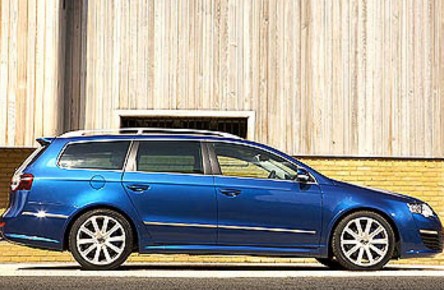
Volkswagen Passat R36 Estate Overviews

Price, Quality, Overviews Of Volkswagen Passat R36 Estate

Image:Volkswagen Passat R36 Estate. autocar.co.uk
What exactly is it?
The marginally improbably effectiveness model of Volkswagen’s functional full-sized estate. Beneath the practical bodywork the R36 offers a three.six litre V6 motor with 299bhp, four-wheel drive and a conventional six-speed DSG twin clutch transmission.

Higher CO2 emissions and high managing expenditures - not least depreciation - imply it'll only ever be of minority fascination. But assessed over a pure bang-per-buck basis, the R36 makes a stunning volume of feeling.
Image: Volkswagen Passat R36 Estate. autocar.co.uk

What’s it like?
Surprisingly convincing. Granted, the R36’s mixture of the north-of-£30K pricetag and sub-25mpg gas economic system are not likely to acquire as well many admirers in modern day Britain. But powering the operating expenditures it is a gifted, likeable auto.

The R36 will get among the list of crispest-shifting implementations nevertheless from the DSG gearbox, working brilliantly in either automated or manual modes. Electricity is shipped seamlessly, and the transmission’s fast reactions help it become a satisfaction to keep the rev-happy engine about the boil.

It’s brisk, too. Volkswagen declare a five.8sec 0-62mph time to the R36, and it feels every single little bit as fast as that determine suggests. There is unquestionably little doubt that, over a long enough Autobahn straight, it will have little problem in finding its 155mph limiter. The motor appears excellent: growling and yowling because the revs ascend. And full-throttle upshifts are accompanied by a pleasingly throaty over-run.

Dealing with is not as rather as sharp because it could be: the R36 possesses commendable straight-line security, but it really feels large and heavy when requested to devour a series of corners, with understeer lurking powering the eager initial turn-in.

Under the surface this Passat has shed the Audi A6 quattro underpinnings of your previous-generation four-wheel push variation, as an alternative getting a Golf 4Motion-spec Haldex clutch around the again axle to divert torque rearwards when slip is detected.

The rest of the practical experience remains as practical as that with the simple Passat estate: a lot of area for occupants and luggage, high quality trim and - inspite of a firm ride - decent refinement.

Image: Volkswagen Passat R36 Estate. autocar.co.uk


So, bought to I obtain a person?
If your company’s having to pay - therefore you can afford the tax - then contemplate one. But we reckon that is one of those people automobiles that can seriously begin to generate feeling two or 3 decades down the road, with half its benefit lose.
Share:
...

Volkswagen Passat

VW Passat

Volkswagen Passat. Volkswagen will officially launch the VW Passat in the US in early 2016. Model It is designed improve the previous model. The shape of the hood, grille, new bumper and more forward the sporty look. There are LEDs headlights and taillights. Additional chrome on bumper trim. On models equipped with R-Line sporty front bumper, side skirts and diffuser rear. 

Volkswagen Passat. Color black accents in some parts, and a rim size of 19 inches. In the interior there is also the instrument panel The new steering wheel and redesigned models. Model The use of color in piano black and chrome part door trim. Audio system using the MIB II connectivity USB / Bluetooth, as well as Apple Carplay. Android automatically connect with and MirrorLink compatibility. 

Volkswagen Passat. For this new model There are heated in the back seat and ease of access when the feet of the trunk keyless owners are under the sensor. There are three types of machines available on the Volkswagen Passat, namely 1800 cc 4-cylinder TSI, 2,000 cc 4-cylinder TDI, and specifically to US market with V6 engine capacity 3.600cc that claimed to have a power of 280 hp. Reportedly Volkswagen The Passat will go on sale in the US at the end of this year.
Share:
...

Volkswagen Golf R 400

Volkswagen Golf R 400

Volkswagen Golf R 400. Volkswagen will produce the new car on display concept at Auto China. Golf R 400 is produced by adopting a four-cylinder engine.

Volkswagen Golf R 400. This information reportedly came out directly from the Head of the Assessment and Development of Volkswagen. Unidentified sources that say that the concept of the Golf R 400 has entered the production stage.

Volkswagen Golf R 400. Present as refresh version, four-door car will be holding a four-cylinder engine with a 2.0 liter capable of spraying power of 400 PS and 450 Nm of torque. For the record, the performance of the vehicle increased by 100 PS and 70 Nm than the predecessor version.

Volkswagen Golf R 400. Meanwhile, the car is connected to a six-speed DSG transmission system and all-wheel drive 4 MOTION. On the whole car weighs 1,420 kg. With that and carrying spec Golf R 400, this car can accelerate at a speed of 0-99 kilometers per hour in 3.9 seconds and can be lauched with a maximum speed of 280 kilometers per hour. So far there has been no information regarding the availability and price of Volkswagen Golf R 400's.
Share:
...

Volkswagen XL1

Volkswagen XL1

Volkswagen XL1 finally introduced the model in the United Kingdom market. The new car is available 30 units are priced starting from 98 515 pounds.

Reporting from Inautonews, Saturday (07/04/2014), the car produced a total of 200 units for the global market, while for the UK only given a quota of 30 units.

Design of the Volkswagen XL1 is a little eccentric. XL1 built with the view to maximize aerodynamics. Interestingly, this car does not have a glimpse of the rear wheels due to be closed by the body.

Meanwhile, the Volkswagen XL1 comes with a weight of 759 kilograms (kg) and supported by the diesel engine capacity of 800 cc two-cylinder combined with electric drive. With a spec that it has, the car can produce a power of 67 horse power (HP) system 7-speed DSG transmission.

The company explains that the XL1 achieve CO2 emissions of 21 grams per km. Questioning the performance, the car can accelerate from zero to 100 km per hour in 12.7 seconds before reaching a maximum speed of 160 km per hour.
Share:

Popular Posts

Labels

Pages